
Vardzia cave monastery: architecture inside the cliff
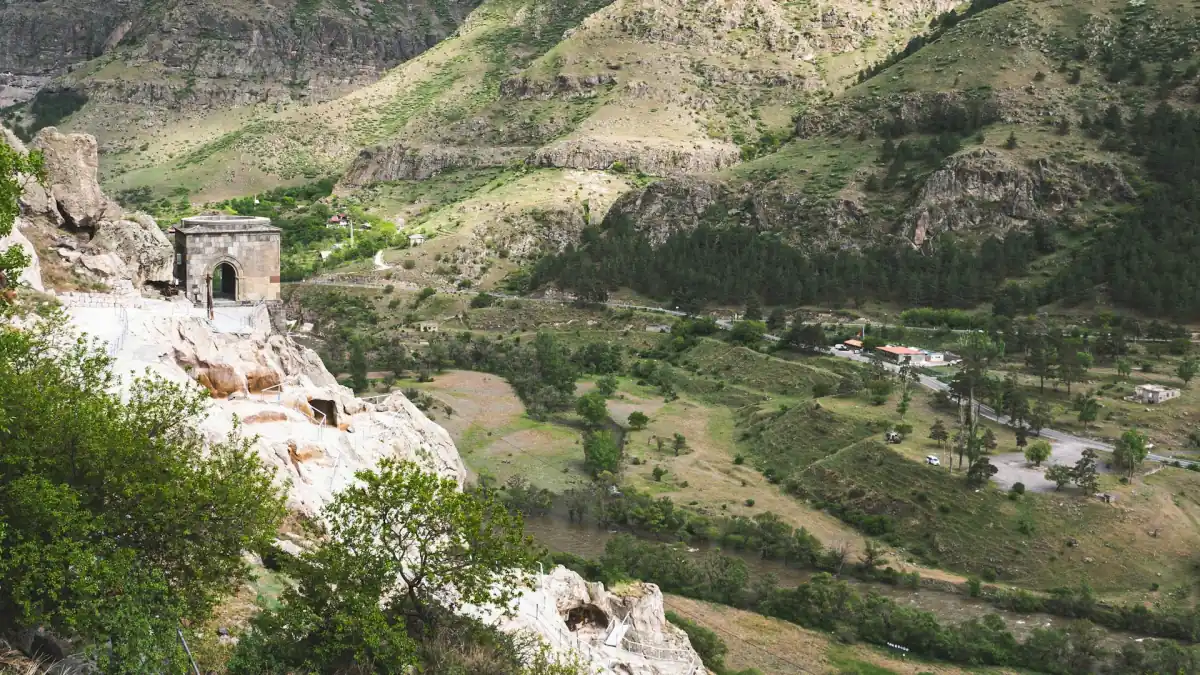
Vardzia cave monastery is a planned medieval complex of rooms cut into rock, connected by passages and supplied with water. In the municipality of Aspindza in southern Georgia, it combines practical construction with a richly painted church. The architecture makes more sense when you look beyond individual cave openings and consider how worship, movement and everyday life fitted into the same rock face.
The heritage administration describes a structure of 13 storeys, with rock-cut chambers, corridors, tunnels and a water-supply system. These are features of the historic complex rather than a promise of a route through every level. For the story of its builders, follow the history of Vardzia; this page concentrates on what those spaces reveal about the monastery.
Our take: Vardzia visits
For a guided visit with WiFi, choose the licensed-guide option. The trip with a Khertvisi photo stop also visits Rabati.
Hand-picked tours, booked through GetYourGuide and Viator. Prices are indicative starting prices in euros (as of October 2026). Tap a tour for live availability and the current price in your currency.
Guided visit to Vardzia
- Highly qualified guide
- Comfortable service
A guided Vardzia visit; confirm the starting point before booking.
Check availability →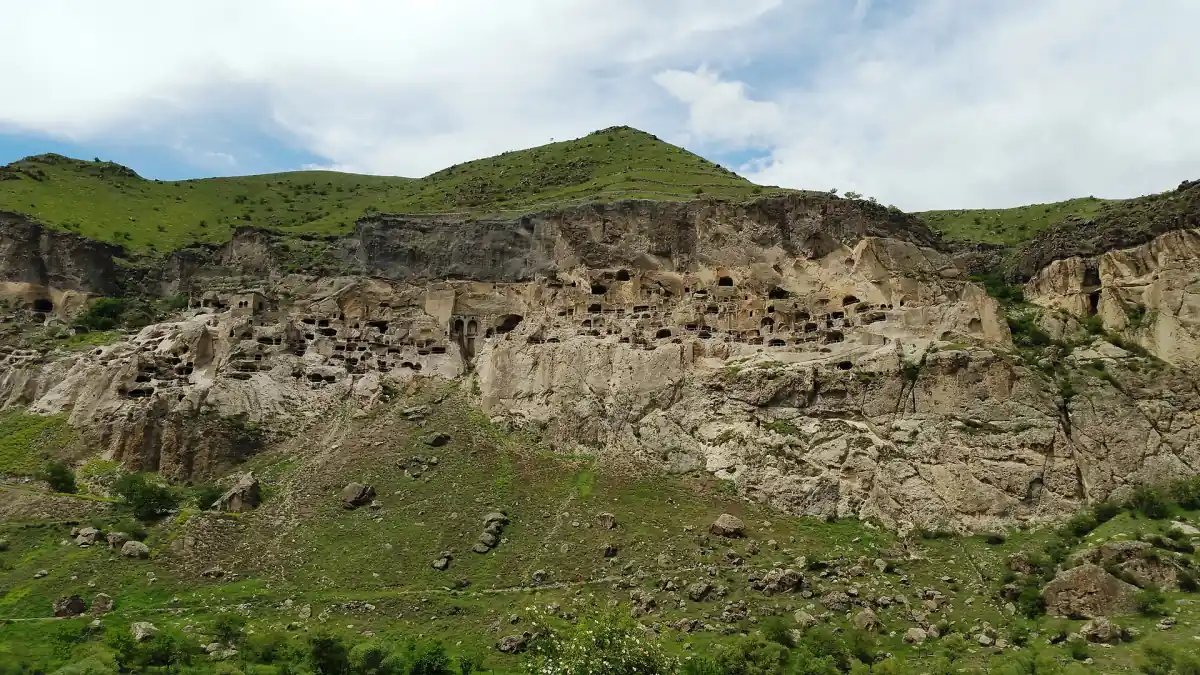
Vardzia visit with licensed guide
- WiFi on board
- In-person guide is licensed or certified
Meet at the white bus on Abano Street for a guided visit.
Check availability →
Vardzia trip with Khertvisi photo stop
- Live tour guide
- Comfortable Transport
- Khertvisi Fortress photo stop
The trip visits Vardzia and Rabati; Khertvisi is a photo stop. Admission costs extra.
Check availability →Guided visits to the cave monastery
Choose a monastery visit with a guide, or a wider day trip that also visits Rabati and pauses for a photograph at Khertvisi.
Rooms, passages and water supply
The Vardzia cave experience is about human construction within a cliff. Rooms and connecting passages belong to an organised settlement, while the water system shows how the builders supported life away from the valley floor. Look at the relationship between openings, circulation and the church rather than treating each cavity as an isolated sight. This is an architectural visit to a monastery, with the rock itself serving as building material.
Georgia's tourism authority counts 242 wholly or partly surviving caves. That figure describes preserved remains, not the number of rooms available to enter during your visit. It is useful for understanding the scale of the monument, while the route you follow should be guided by directions on site. Avoid planning your day around reaching a particular tunnel or completing every storey.
Walking through the site: steps and physical demands
A visitor account updated on 20 September 2026 describes uneven steps, steep paths and low tunnels, and recommends shoes with good grip. Take that physical description into account when deciding whether the site suits your group. The visit timing page helps you place the monastery within the day, while entry and optional services are explained separately. Before travelling, ask the museum administration about access near the Secret Tunnel following the September 2026 rockfall. Use only authorised visitor paths.
Church of the Dormition and frescoes
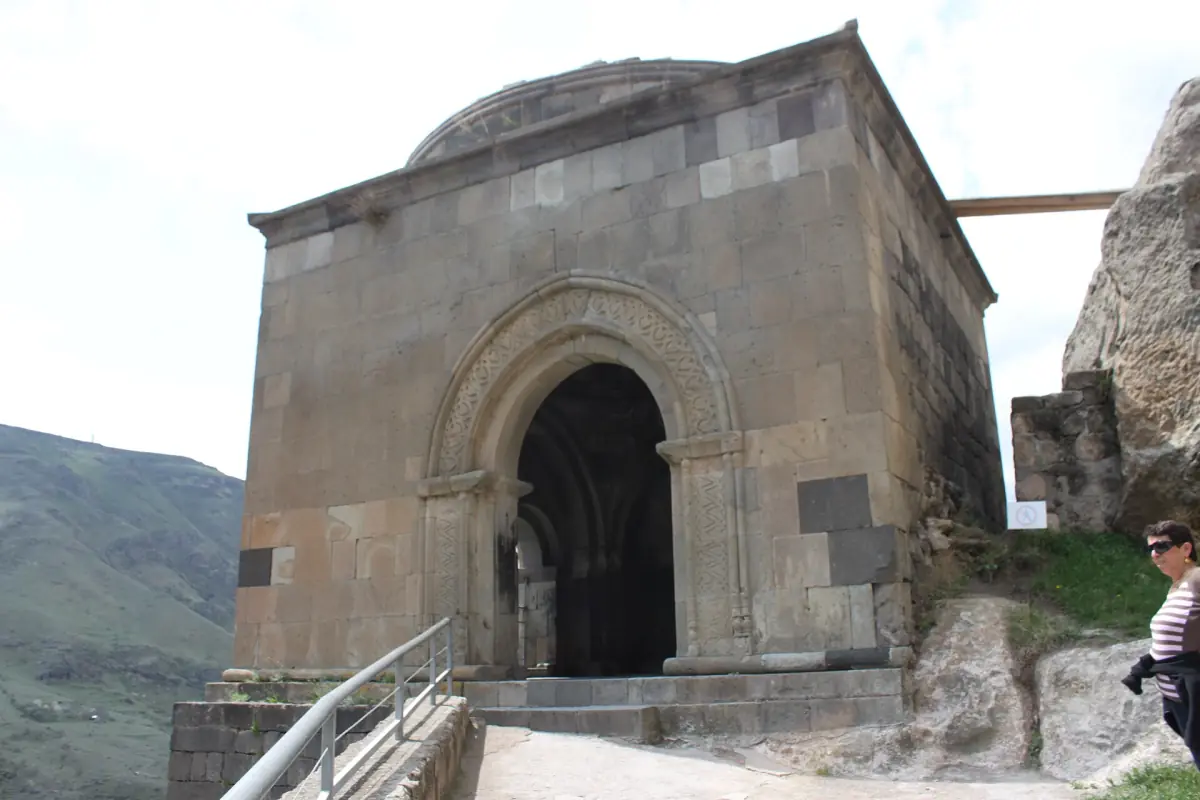
The Church of the Dormition is the central religious and artistic feature of the complex. Its frescoes include images of King Giorgi III and Queen Tamar, connecting the sacred interior with the royal patrons associated with the monastery's medieval development. Architecture and art belong together here: the painted church is part of the same planned rock-cut environment as the surrounding chambers and passages.
Give the portraits a place in your understanding of the site rather than treating the church only as another cave. They bring identifiable rulers into a much broader arrangement of rooms and infrastructure. A guided visit can help organise those themes, although the listed excursions are ordinary sightseeing trips. Choose one for its actual guide service and route, with art and religion as subjects within the monastery visit.
An active monastery and a respectful visit
The same September 2026 visitor account describes Vardzia as an active monastery. It reports long trousers for men and long skirts with covered hair for women inside the church. It also reports private photography in the wider complex but a restriction on photography inside the church. These are observations from a travel account; follow instructions at the church entrance for your own visit.
Bring suitable covering yourself and allow the religious setting to shape your behaviour. Keep the distinction between looking at the outside architecture and entering a place of worship clear. Let people worship without interruption, and put the camera away when requested. Your day should work around the monastery's religious use rather than depend on a particular interior photograph.
Choosing the guided route
The Tbilisi day trip combining Vardzia, Rabati and Borjomi includes transport and a live guide, with Khertvisi specifically a photo stop. Admission and meals are extra. If entering that fortress matters to you, read the Khertvisi guide before choosing the route. A roadside photograph and a visit inside the fortress are different uses of your day.
The guided Vardzia, Borjomi and Rabati option with a 14-hour listed duration includes a guide. Another 13-hour option includes an in-person licensed or certified guide and onboard Wi-Fi; its listing had only one review on 5 November 2026, so judge it mainly by its stated services. For a wider route comparison, continue to Vardzia day trips.
Questions about the monastery
What is the main church at Vardzia?
The Church of the Dormition, with frescoes including portraits of Giorgi III and Tamar, is the central religious feature.
Does the surviving cave count describe the visitor route?
The 242 wholly or partly surviving caves describe the preserved complex. Follow the route instructions on site for the spaces you can visit.
How should I prepare for the church?
Bring modest covering and follow instructions at the entrance. The September 2026 visitor account reports specific clothing practices and restricted photography inside.
Does the combined day trip enter Khertvisi?
The trip described here with transport and a live guide includes Khertvisi as a photo stop, alongside visits to Vardzia and Rabati.