
Vardzia history begins with a medieval monastery
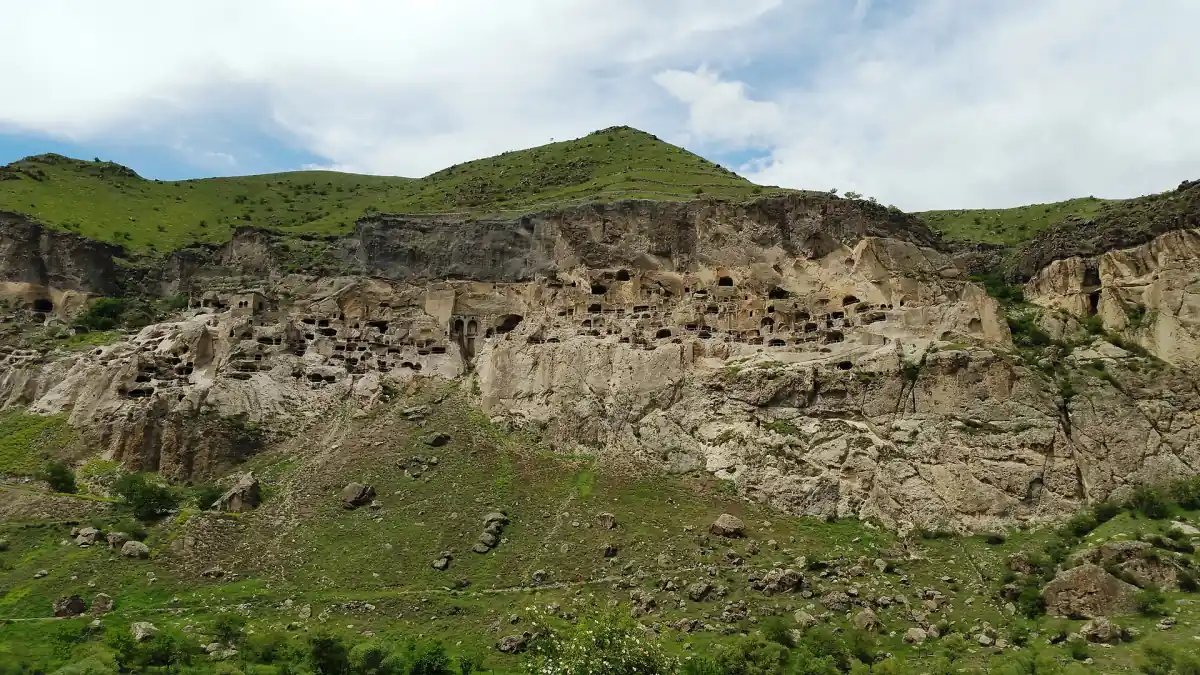
Vardzia history centres on the 12th century and the reigns of King Giorgi III and his daughter, Queen Tamar. The rock-cut complex belongs to medieval Georgia, while the surrounding Vardzia-Khertvisi landscape preserves traces of settlement from much earlier periods. Keeping those two timelines separate helps explain what you are seeing: an older inhabited region and a monastery developed within it.
The Church of the Dormition, royal portraits, corridors and water supply give that history a physical form. A guided day trip can place the monastery alongside Rabati and the wider region. For the arrangement of the rooms and the religious setting of a visit, continue to the cave monastery guide. Here the focus is on origins, change and the surviving evidence.
Our take: guided Vardzia trips
Choose live commentary on board or WiFi for the journey. Another option has an English- and Russian-speaking guide.
Hand-picked tours, booked through Viator. Prices are indicative starting prices in euros (as of October 2026). Tap a tour for live availability and the current price in your currency.
Vardzia trip with guide and WiFi
- Proffesional guide
- WiFi on board
- Air-conditioned vehicle
Allow 12 to 13 hours and confirm the meeting point in advance.
Check availability →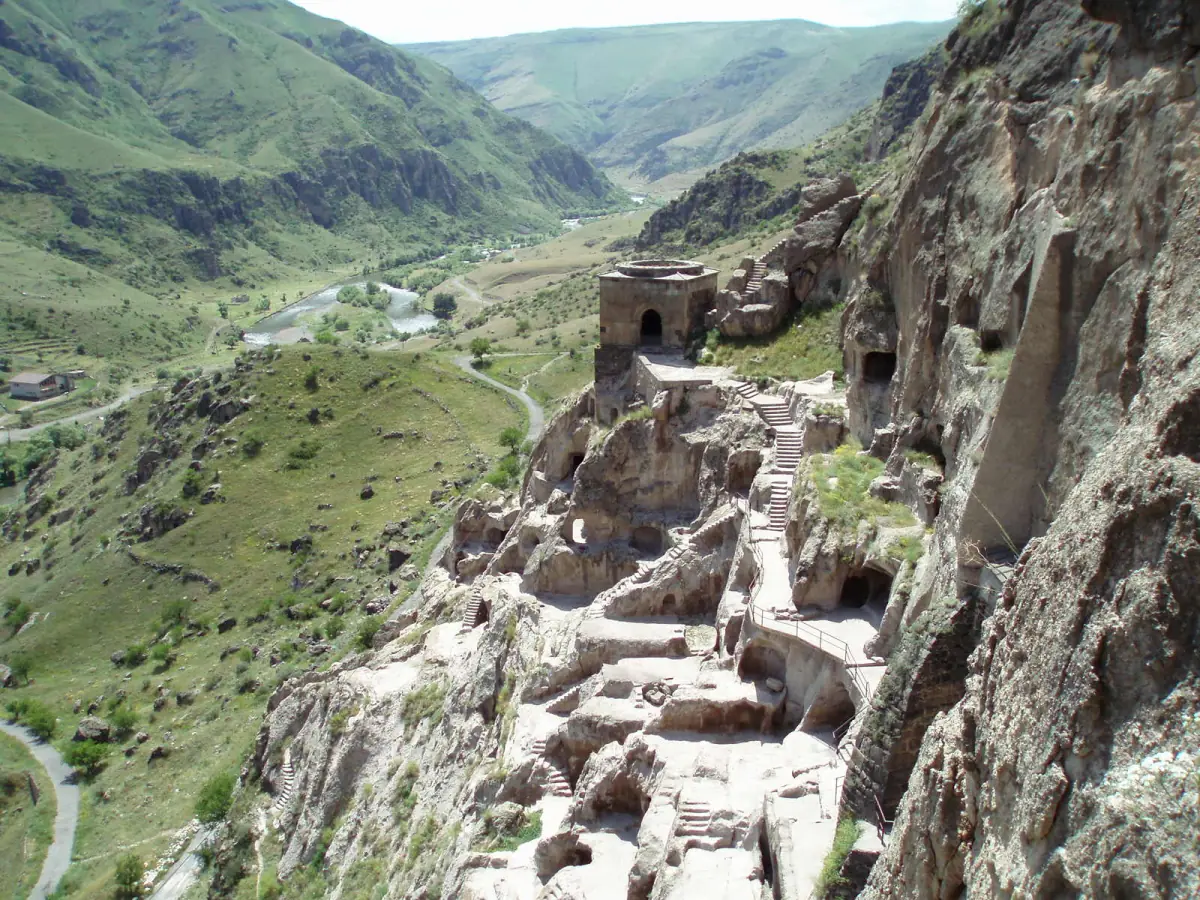
Vardzia trip with live commentary
- Professional guide
- Air-conditioned vehicle
- Live commentary on board
Meet near Meidan Square in Old Tbilisi for a guided trip with commentary on board.
Check availability →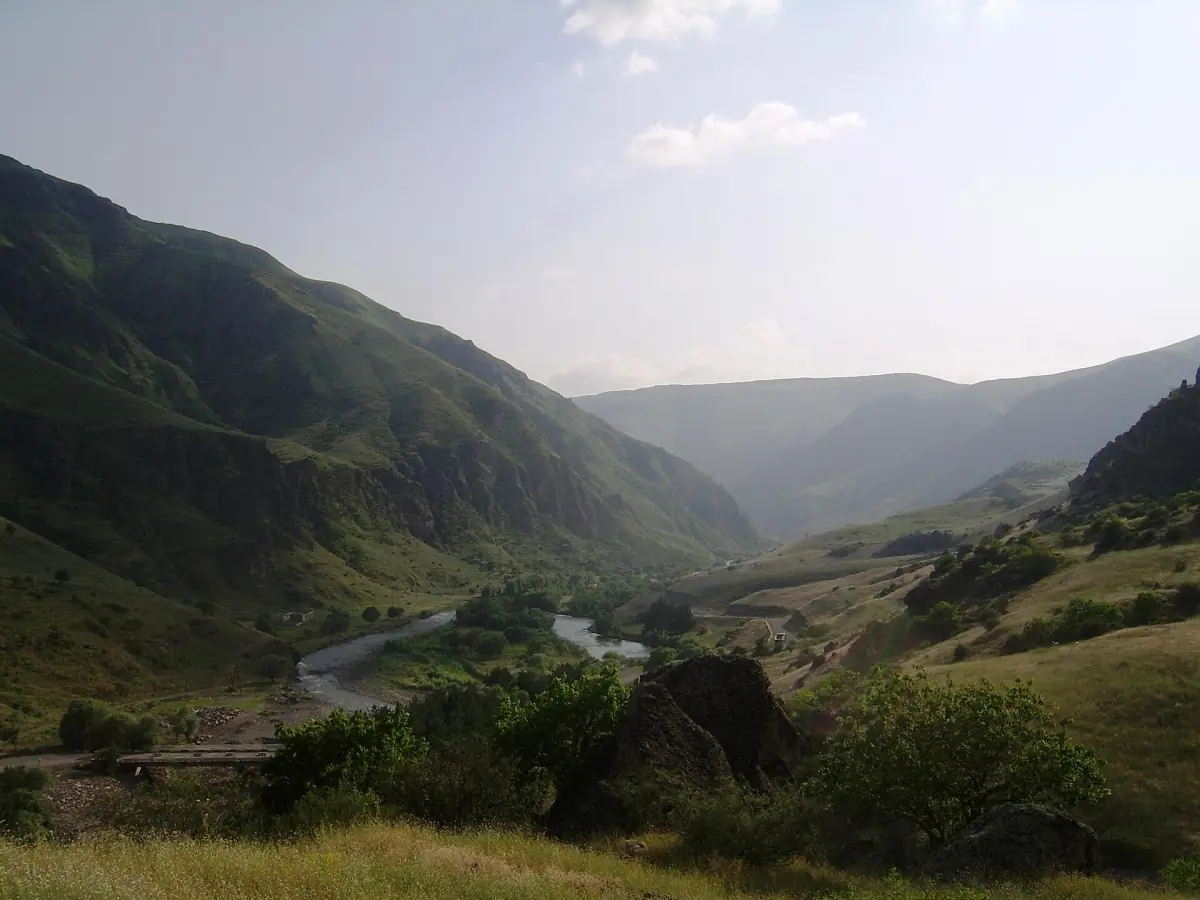
Vardzia trip with English and Russian guide
- Air-conditioned vehicle
- English and Russian Guide
Meet your guide at the I love Tbilisi sign.
Check availability →Guided day trips through Vardzia's region
Compare three guided combinations of Vardzia, Rabati and Borjomi, with different meeting arrangements, languages and journey lengths.
Giorgi III, Tamar and the medieval complex
The monastery's association with Giorgi III and Tamar is visible in the Church of the Dormition, where their painted portraits survive. These images connect royal patronage with a religious centre cut into the cliff. Rather than imagine a collection of unrelated caves, read the monument as a planned complex whose church, passages and infrastructure served different parts of its life.
The heritage administration describes 13 storeys, rock-cut rooms, corridors, tunnels and water supply. Such infrastructure is an important part of the story: the monastery required connections and practical supplies as well as a sacred interior. The architecture reveals organisation on a larger scale than the view into a single chamber can convey. It also explains why a historical visit benefits from looking at relationships between spaces.
Earthquake damage and what survives
Earthquakes form part of Vardzia's history of damage. A visitor account updated on 20 September 2026 dates the major destructive earthquake to 1283. The specific year comes from that travel account; the broader history of earthquake damage is also described by Georgia's tourism authority. It is a useful turning point when moving from the medieval building project to the remains visible today.
The tourism authority counts 242 wholly or partly surviving caves. Read this as a description of preservation rather than a medieval population figure or a visitor itinerary. Surviving chambers, painted interiors and infrastructure give different kinds of historical evidence. None needs an invented total of original inhabitants or a precise percentage of destruction to explain why the complex matters.
Ancient history and archaeology of the wider region
Georgia's Vardzia-Khertvisi UNESCO submission, dated 24 October 2007, describes Chalcolithic settlement in the wider area. It also mentions burial mounds from the 17th to 16th centuries BC as evidence relating to the Trialeti culture. Those traces belong to the region's archaeology. The medieval monastery has its own much later chronology, associated with Giorgi III and Tamar.
The UNESCO context is the Tentative List, a national list of places proposed for possible future nomination. Vardzia-Khertvisi should be understood through that status when planning a cultural route. The archaeological background adds depth to the journey through the landscape, while the monastery remains the main medieval stop. Choose the listed guided excursions for their stated sightseeing services and historical destinations.
Historic wine cellars and everyday supplies
Georgia's tourism authority describes a historic stock of 28 wine cellars with 235 qvevris. These vessels and cellars broaden the story beyond royal portraits and church painting. They are evidence of the economic life associated with the complex and offer another way to think about how a large rock-cut settlement functioned. They describe historical storage rather than a tasting programme for today's visit.
If this part of Georgian culture interests you, Kakheti provides a separate regional context for a wine-focused journey. Keep that interest distinct from the programme of your Vardzia day trip. The history of storage at the monastery is already a worthwhile subject without adding a present-day winery visit to the route.
Khertvisi, Rabati and a guided historical route
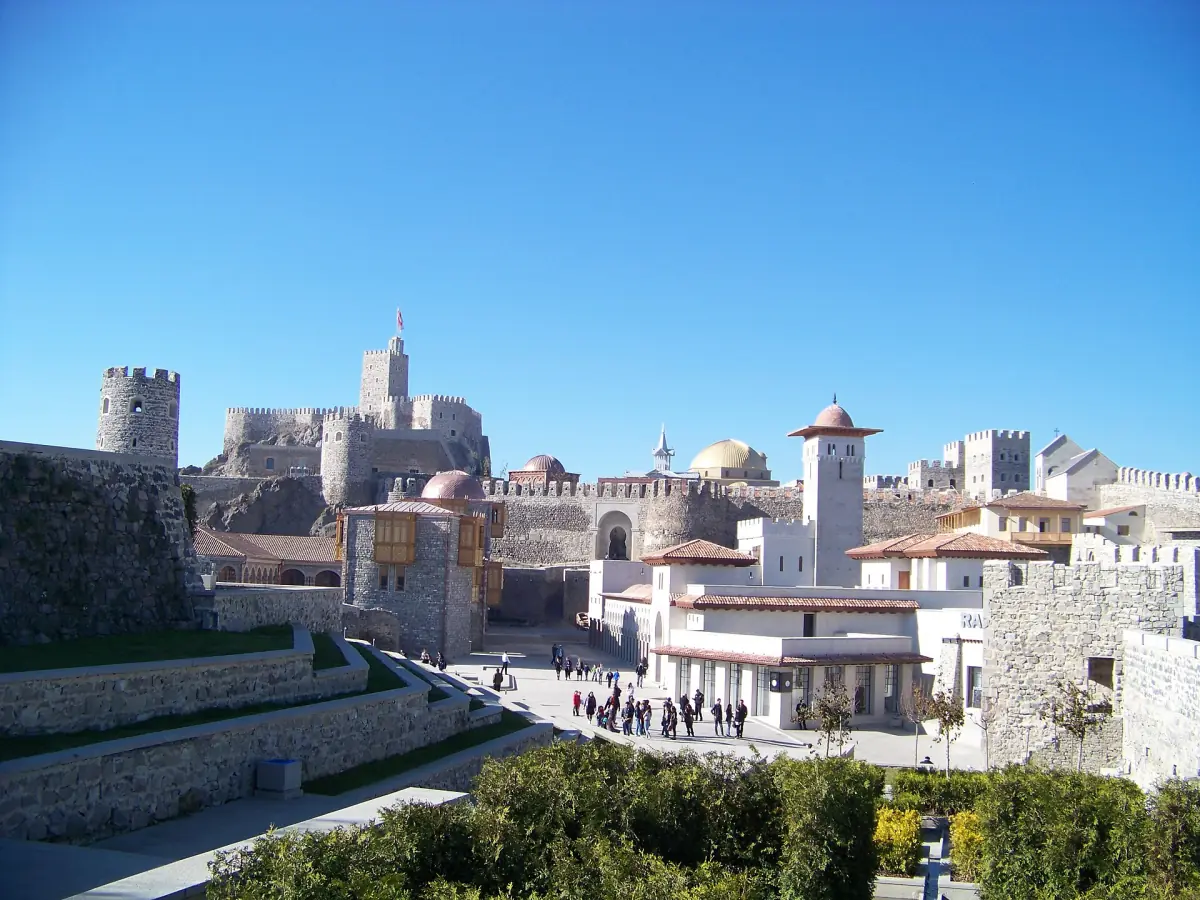
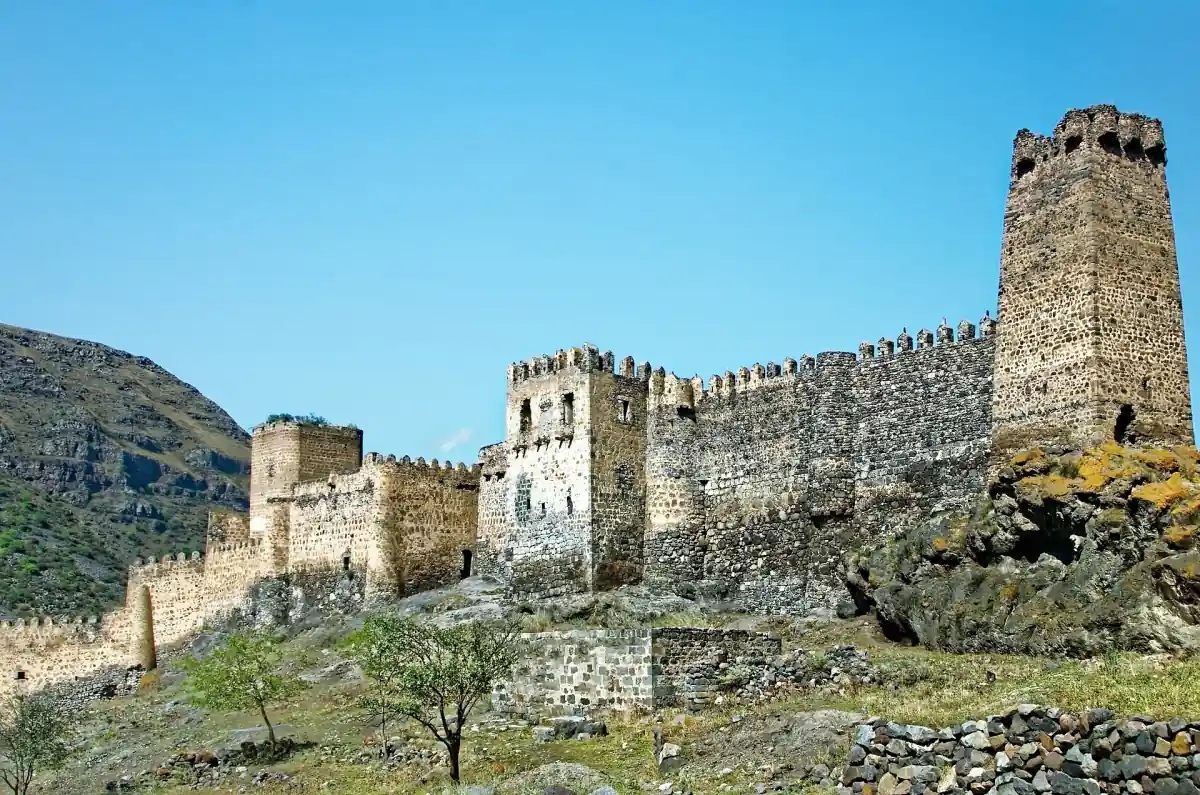
Khertvisi's citadel, enclosure walls and hall church illustrate the fortified side of the region. Georgia's tourism authority places the fortress in the 10th century and describes repeated rebuilding. Rabati offers a different sequence: its operator traces origins to the 9th century, expansion to the 12th and its role as a Jakeli residence to the 13th. The extensive renovation in 2011 to 2012 also shapes what visitors see today.
Among the guided combinations, the 12 to 13-hour option includes a guide, Wi-Fi and an air-conditioned vehicle. The 12-hour route includes a guide, vehicle and live onboard commentary, meeting near Meidan Square and Metekhi Bridge. The 14-hour option includes a guide speaking English and Russian and an air-conditioned vehicle. Compare these practical differences on the day-trip page and keep admission costs separate from the guide service.
Questions about Vardzia's past
Who is associated with Vardzia's construction?
Its main medieval development is associated with Giorgi III and Queen Tamar in the 12th century. Both appear in the church frescoes.
Was the monastery founded in the Bronze Age?
The Bronze Age burial evidence concerns the wider region. The monastery's principal development belongs to the medieval period.
What does UNESCO Tentative List status mean here?
Vardzia-Khertvisi is on Georgia's Tentative List, the stage used for places proposed for possible future nomination, rather than the inscribed World Heritage List.
How does Rabati differ from Vardzia?
Rabati is a castle complex with successive building phases and extensive renovation in 2011 to 2012. Vardzia is a medieval rock-cut monastery.